
Why Leg Training Is Vital for Your Health
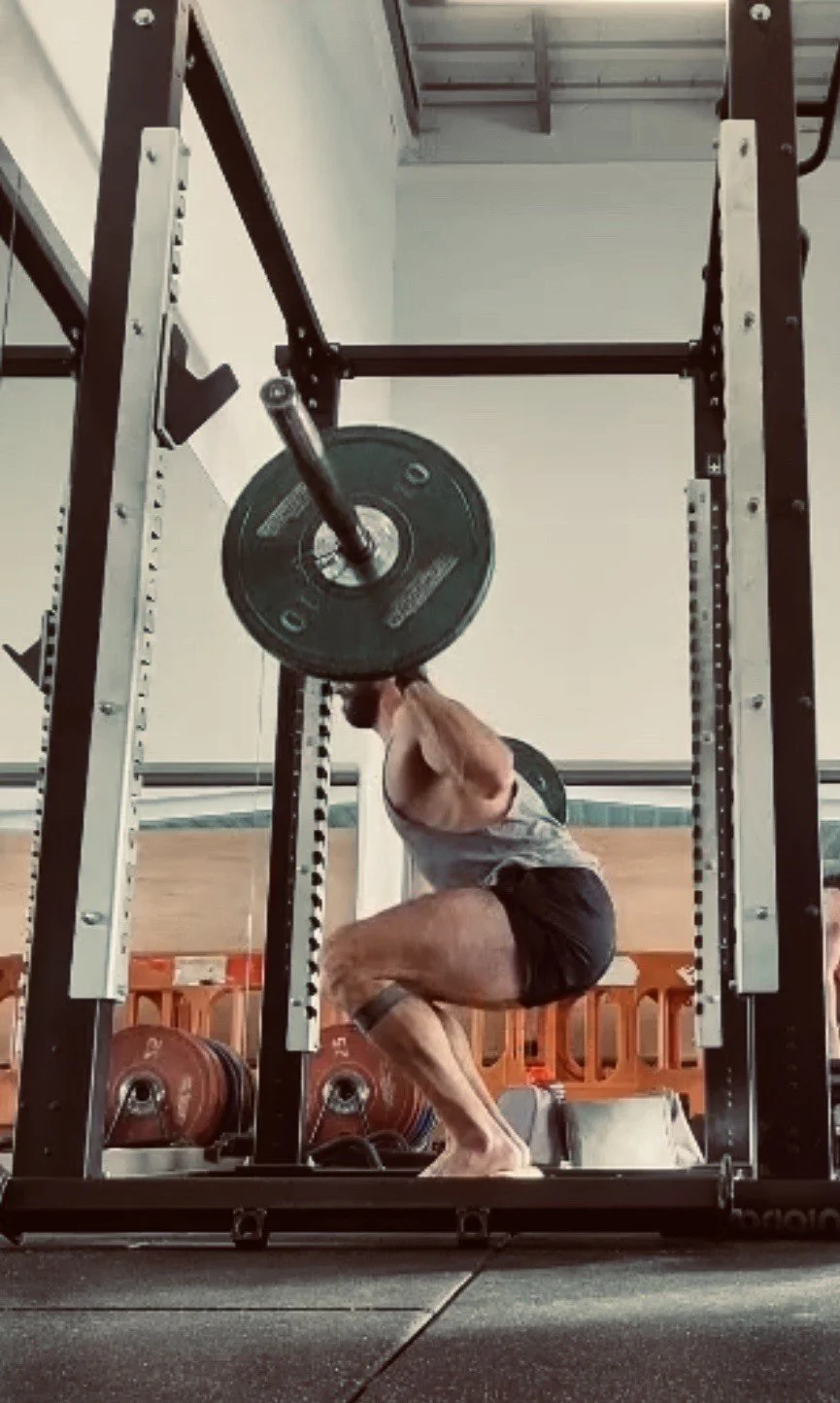
Client in Brighton Back Squatting to Build Leg Strength
Load your Legs!
“Never skip leg day” gets thrown around a lot — and for years it was aimed at the people who trained chest and arms twice a week and ignored everything below the waist. That created some genuinely awful physiques. Over the last decade the tide has turned (helped massively by more women getting into training, where legs are often the main focus).
But here’s the part most people still miss: leg training isn’t just about how you look. Strong legs are a health marker — and in a very real way, they can save lives. I’ve seen it over and over again working as a personal trainer in Brighton and online: when people get their lower body stronger, everything improves.
Strong legs are linked to living longer
Research has consistently shown that having more muscle — particularly in the lower body — is associated with lower all-cause mortality. That includes reduced risk from metabolic diseases such as type 2 diabetes, and even lower rates of certain cancers.
There’s a simple reason legs matter so much: they make up over half the muscle mass in the body. More muscle means more places to store glucose (carbohydrates) as glycogen. Bigger, stronger legs act like a bigger storage tank. Instead of glucose floating around in the bloodstream and being more likely to end up stored as body fat, it gets pulled into the muscle — especially when you’re training consistently.
After 40, this becomes non-negotiable
From around 40 onwards, muscle mass starts to decline faster in a process called sarcopenia. That decline doesn’t just affect how you look — it impacts:
metabolic health
bone density (osteoporosis risk, especially in women)
balance and stability
mobility and independence later in life
People don’t “get old” because of their music taste. They get old when they lose strength and start losing the ability to move well. And that’s the key point: mobility isn’t flexibility — it’s strength, control, and capacity.
The good news is this decline is not inevitable. Progressive strength training can dramatically slow it down, and in some cases almost halt it. Some research has even shown that older adults who lift regularly can maintain strength levels comparable to much younger untrained people.
Modern life has conditioned us to be inactive. We sit for work, sit in the car, sit at home — and then act surprised when our bodies fall apart. Human beings weren’t built for that.
What stronger legs help with
The list is long, but here are some of the big ones:
lower risk of metabolic disease (including type 2 diabetes)
reduced cancer risk
reduced fatty liver risk
lower rates of dementia
improved cognition
better mobility and independence into older age
reduced fracture risk later in life
improved blood lipid profile (including lower triglycerides)
How to get stronger legs
Keep it simple.
You don’t need a complicated plan, and you don’t even need a gym to make progress.
If you have a kettlebell or weights at home
Do 3 sets of squats, taken close to failure (meaning you’ve only got 1–2 reps left in the tank)
Pick a load that gets you there somewhere between 5–30 reps
Do this 3x per week
If the weight is too light, you’ll eventually need to upgrade — and given the benefits, it’s one of the best investments you can make.
If you don’t have any equipment
Use the Bulgarian split squat. It’s brutal in the best way because it loads one leg at a time, so you hit failure much faster without needing weights.
Do 3 sets per leg, close to failure
Same rep range: 5–30 reps
3x per week
If you want help choosing the right exercises for your knees/hips, structuring this properly, or progressing it week to week, you can train with guidance.