
Training for Looks?
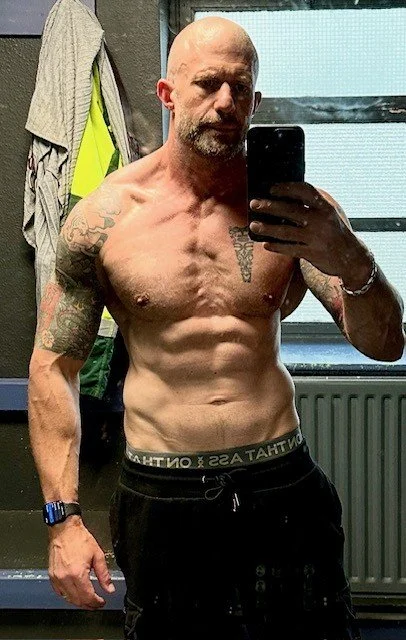
Should You Train Just for Aesthetics?
There’s a strange snobbery that sometimes creeps into the fitness world. People can look down on those who train purely to look better — to be leaner, more muscular, more defined. I think that’s a massive mistake.
We all train for different reasons. Some people chase strength. Some want better fitness. Others want longevity, pain-free movement, or mental clarity. And yes — some people simply want to look better naked. None of these motivations are more “valid” than the others.
I’ve worked as a personal trainer in Brighton for decades, and I’ve heard every version of this debate. If someone wants to look like The Rock, Gal Gadot, or even the donkey from Shrek, it’s genuinely no one else’s business. Motivation is personal. Who are we to judge what lights someone’s fire?
All movement is good. The idea of looking down on aesthetic-driven training usually comes from three big misconceptions — and they’re all wrong.
1. “Training for aesthetics doesn’t build functional strength.”
The term functional strength should probably have died the moment it was invented.
Somewhere along the line, it gave rise to trainers designing increasingly ridiculous exercises — balancing on Swiss balls while juggling kettlebells, wobbling around on unstable surfaces and calling it “real-world strength.” In reality, that sort of training often does the opposite of what it claims.
True, sport-specific or “functional” strength comes from two things:
Getting very strong in basic movement patterns — squatting, hinging, pushing, pulling, carrying.
Letting the sport or activity itself translate that strength into usable skill.
Trying to mimic sporting movements in the gym and then loading them heavily is a great way to interfere with motor patterns, not improve them.
Here’s the uncomfortable truth for a lot of people:
a bigger muscle is a stronger muscle.
Muscle size and strength are tightly linked. Think of muscle as the engine and your nervous system as the fuel. You can have endless fuel, but if the engine is tiny, you’re still not going very fast. Likewise, you can build a massive engine, but without neurological efficiency, you won’t use it well.
The thing most people miss is that when you train a muscle to grow, you’re also training the nervous system alongside it. Aesthetic training doesn’t sit apart from strength — it supports it.
2. “Training for aesthetics doesn’t improve health.”
Another myth.
Muscle mass has been repeatedly shown to correlate with reduced all-cause mortality. More muscle is protective against metabolic disease, improves insulin sensitivity, and helps preserve strength, balance, and mobility as we age.
In simple terms: muscle keeps you alive longer and functioning better.
Aesthetic training often involves progressive overload, structured programming, and consistency — all things that improve bone density, joint health, cardiovascular fitness, and resilience into later life.
You don’t suddenly stop being healthy because you like having visible shoulders or abs.
3. “Training for aesthetics is egotistical.”
This one always makes me smile.
Yes, training to look good benefits you. But it also inspires the people around you. When someone sees a body that looks capable, strong, and well-maintained, it subtly reminds them of what’s possible.
We weren’t designed to be soft lumps of meat suspended by weak bones. We were built to be robust, capable, and resilient. Wanting to improve how you look is often just a surface expression of wanting to feel better, stronger, and more confident in your own skin.
There’s nothing shallow about self-respect.
Taking care of your body — whether that’s for performance, health, or aesthetics — shouldn’t be dismissed as vanity. Improving your mind and body is one of the most constructive things you can do with your time.
So… Should You Train for Aesthetics?
If that’s what motivates you to train consistently, intelligently, and with intent — then absolutely yes.
Aesthetic goals can be the gateway to strength, discipline, health, and long-term physical independence. The barbell doesn’t care why you picked it up. What matters is that you did.
Train for what moves you. Everything else tends to fall into place.
If you want help structuring your training — whether your goal is aesthetics, strength, or simply feeling better in your body — you can learn more about how I coach here:
Or if you’re ready to get started: